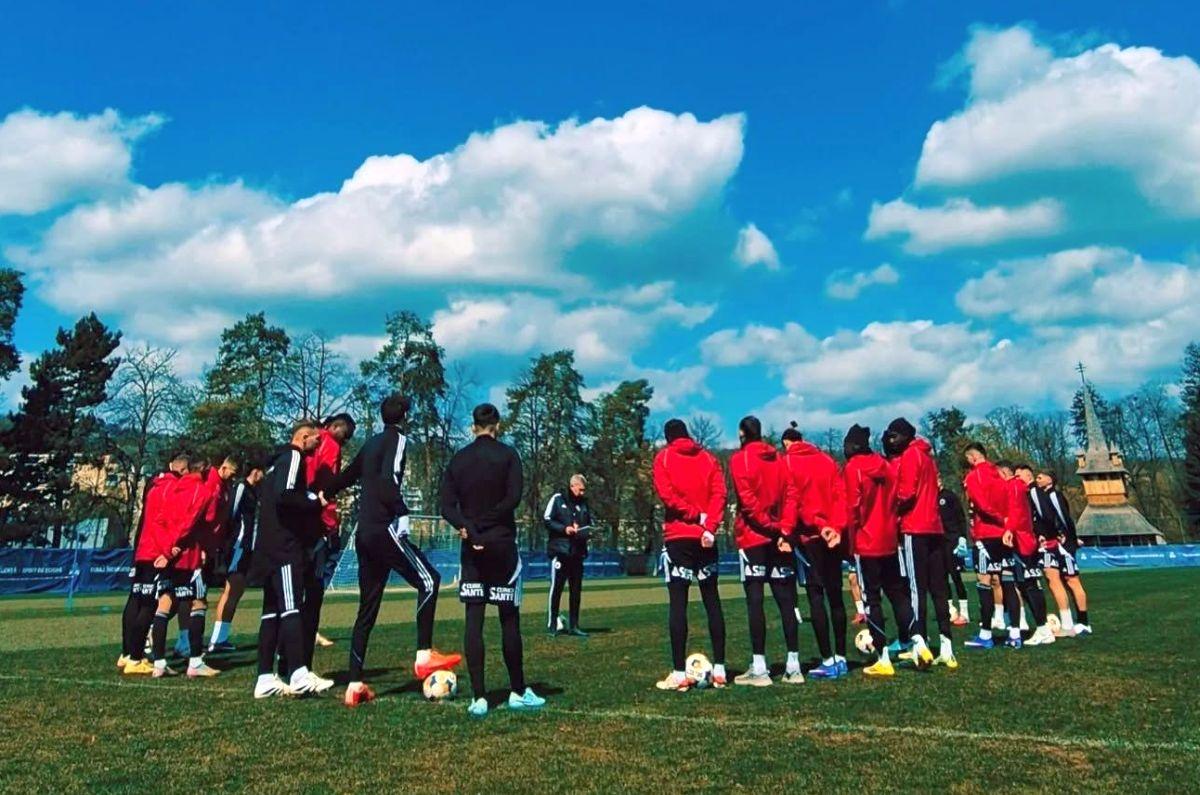
U Cluj has secured the largest municipal funding package in the club’s history, with the Cluj-Napoca Local Council approving 14 million lei (approximately 2.67 million euros) in public money for the 2026 season. The record allocation surpasses the previous high of 2.63 million euros set in 2025 and has reignited debate about the role of public financing in Romanian professional football.
Record-Breaking Allocation
The Council’s decision came after a formal request from the club and a review by the sports project analysis and selection commission, which confirmed that U Cluj meets all eligibility criteria for non-reimbursable funding. The approved amount is slightly below the 2.86 million euros initially requested but still represents a significant increase year-on-year.
According to the club’s published financial report, public money accounted for 28 percent of U Cluj’s total revenue in 2025, highlighting just how dependent the Superliga outfit has become on local government support. The official decision reads: “Approval is granted for the allocation of 14,000,000 lei from the local budget for 2026 to the Sports Association Football Club Universitatea Cluj, for the purpose of supporting sporting training and competition activities.”
Steaua Comparison
The new funding places U Cluj ahead of Steaua Bucuresti in terms of municipal support. Steaua, one of Romania’s most iconic clubs, received approximately two million euros from public authorities — some 700,000 euros less than U Cluj. However, Steaua faces an additional hurdle: the club is currently prohibited from promotion to the Superliga, meaning its public funding supports a Liga 2 campaign rather than top-flight football.
The only club receiving more public money than U Cluj is newly-promoted FC Voluntari, which secured 3.44 million euros from local authorities in 2025. Voluntari’s funding package is the largest in the country and reflects the Ilfov county council’s commitment to establishing the club as a permanent fixture in the top division.
Why U Cluj Can Receive Public Money
U Cluj’s ability to access municipal funding stems from its legal structure. The club is currently organised as an NGO (non-governmental organisation), which qualifies it for non-reimbursable public funding under Romanian law. By contrast, city rivals CFR Cluj cannot receive public money because the football club operates as a joint-stock company (societate pe actiuni).
Club president Radu Constantea has confirmed that this structure is likely to change. “We will try over a period of 1-3 years to transfer the professional activity from the Sports Club to an SA (joint-stock company),” Constantea said. “This transformation is only possible at the start of a season and requires time. The earliest it can be done is at the start of next season — summer 2027.”
The planned transition to a joint-stock model would open the door to private investment while potentially closing the tap on public funds. Constantea indicated that the club aims to identify local, regional, or even international investors to purchase share packages alongside the Sports Club entity.
Broader Context
U Cluj is not alone in receiving municipal support. Cluj-Napoca Council also allocated 570,000 euros to basketball champions U-BT Cluj and 26,000 euros to CS CFR Cluj (a different entity from the football club, focused on bowling). The total sports funding package for the city reflects Cluj-Napoca’s ambition to position itself as Romania’s sporting capital.
However, the arrangement has drawn criticism. Commentators on the Gazeta Sporturilor article pointed out that while local administrations receive money from central government, they redirect it to sports clubs — effectively a form of indirect state funding for professional football. Others noted that clubs like CSU Craiova pay 18,000 euros per match in stadium rental fees, suggesting that the financial landscape of Romanian football is far from uniform.
As U Cluj prepares for the 2026 season with its record budget, the debate over public money in Romanian football shows no signs of abating. For a club that has fluctuated between divisions over the past decade, the financial security provided by municipal support offers stability — but at the cost of ongoing questions about fairness, transparency, and the long-term sustainability of a model reliant on taxpayer money.
Source: Gazeta Sporturilor. This article was originally written for the Football News Autopilot platform.