
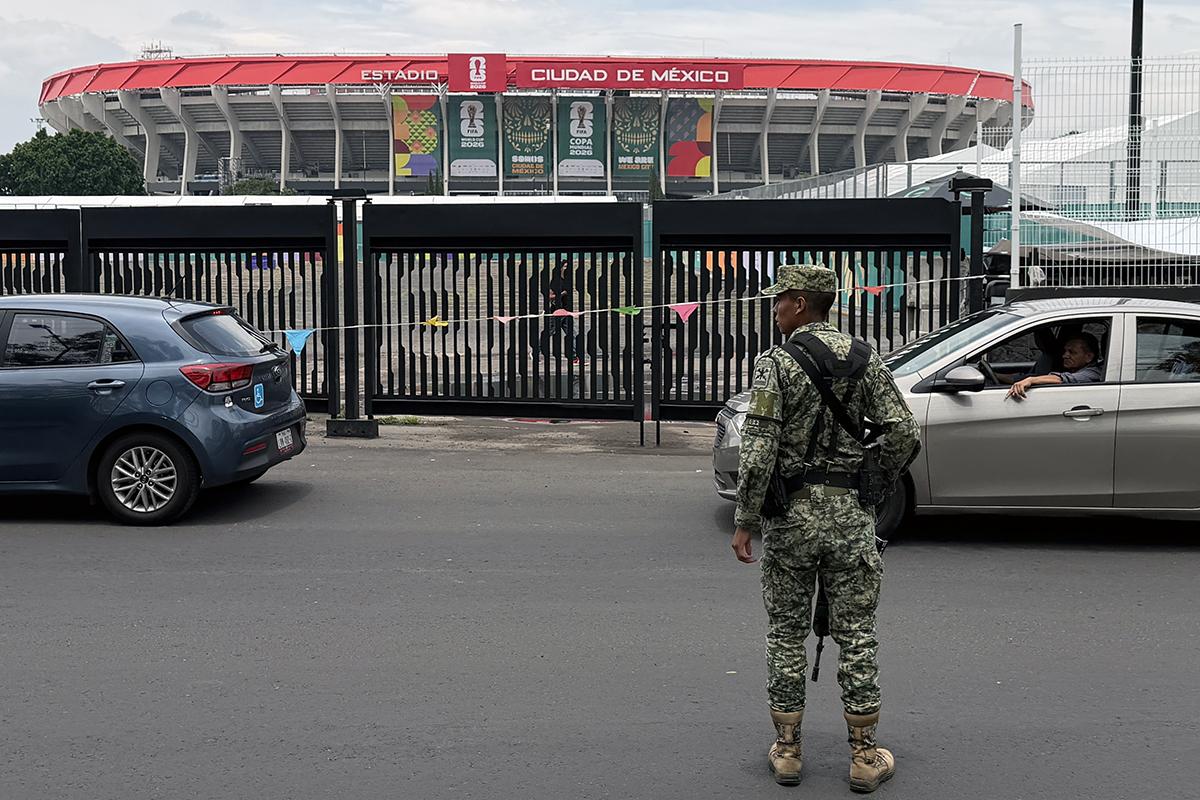
A City Under Security
Mexico City is undergoing an unprecedented security transformation as it prepares to host matches during the 2026 World Cup. With the tournament kicking off across the United States, Mexico, and Canada, the Mexican capital has been designated a high-security zone, with nearly 10,000 police officers deployed to protect fans, players, and officials.
Citizen Security Secretary Pablo Vazquez announced the mobilization of 9,194 police officers specifically tasked with securing critical points across the sprawling metropolis. The operation targets three main priorities: the legendary Estadio Azteca, the FIFA Fan Fest perimeter in the Zocalo, and tourist-heavy zones throughout the city.
The Azteca: A Fortress Within a Fortress
When FIFA awarded Mexico the honor of co-hosting another World Cup, many questioned the logic not on logistical grounds, but on safety. The Mexican response has been characteristically robust: a guerrilla-style urban security strategy based on so-called security bubbles.
The mammoth deployment blends traffic police, special forces units, and hundreds of undercover agents working in concert. Three distinct security zones have been established. The first and most heavily guarded is the Estadio Azteca itself, where militarized controls extend for kilometers around the stadium.
A new pedestrian system called the Ultima Milla has been introduced — the final mile — with all vehicle access completely blocked in a ring around the stadium. Fans will approach on foot through checkpoints designed to detect anything from prohibited items to potential threats.
A City of Contrasts
Mexico City presents unique challenges for security planners. It is a vibrant, chaotic metropolis of over 22 million people, known for its rich culture, incredible cuisine, and unfortunately, its reputation for crime. The contrast between the festive atmosphere of a World Cup and the harsh realities of urban security has created a complex operational environment.
The Zocalo, the city’s main square and one of the largest public squares in the world, will host the FIFA Fan Fest. Here, the security apparatus shifts from militarized control to a more subtle, integrated approach blending visible policing with plainclothes surveillance.
A Test for Mexico
For Mexico, hosting World Cup matches is both an honor and a referendum on its ability to ensure safety at scale. The country has hosted two previous World Cups — in 1970 and 1986 — but security concerns in the modern era are fundamentally different. The 2026 tournament represents the largest single security operation in Mexico’s peacetime history.
With teams like Argentina, Brazil, and Germany set to play at the Azteca, the eyes of the world will be on Mexico City. The fortress strategy, if successful, will not only protect fans but serve as a powerful statement about the country’s capacity to host global events safely.