Tag: World Cup 2026

  • Christian Eriksen Collapses Again on International Duty: Football World in Shock

    Christian Eriksen Collapses Again on International Duty: Football World in Shock

    History Repeats Itself on the Pitch

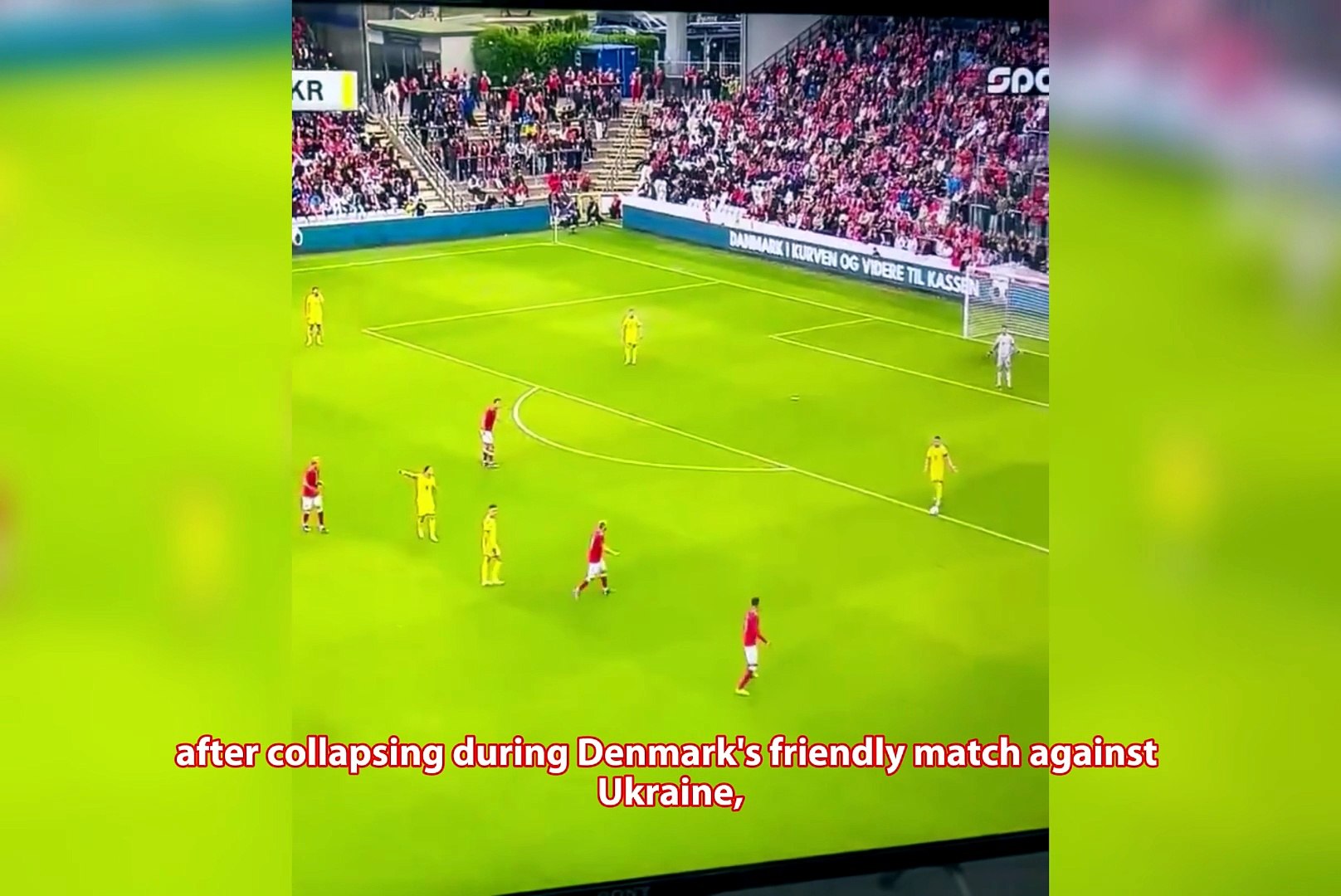
    In what can only be described as a harrowing déjà vu, Christian Eriksen collapsed during Denmark’s international match on June 7, 2026, sending shockwaves through the football world. The 34-year-old midfielder, who suffered a cardiac arrest during Denmark’s Euro 2020 opening match against Finland, experienced another alarming on-pitch incident that left players, staff, and fans in a state of panic.

    Medical teams rushed onto the field immediately as the match was suspended. The scenes evoked painful memories of the 2021 incident, where Eriksen collapsed suddenly and had to be resuscitated with a defibrillator. Since then, the Danish playmaker has been playing with an implantable cardioverter-defibrillator (ICD) device, which monitors his heart rhythm and delivers shocks if dangerous arrhythmias occur.

    Immediate Medical Response and Aftermath

    The swift response from medical personnel was reminiscent of the professionalism displayed during the Euro 2020 incident. Players from both sides formed a protective barrier around Eriksen as medical staff worked to stabilize him. Teammates were visibly distressed, with several players seen in tears as the gravity of the situation set in.

    Denmark’s team doctor and the stadium’s emergency team worked in coordination to provide urgent care. The match was subsequently abandoned, with officials prioritizing Eriksen’s health and wellbeing over any sporting considerations.

    A Remarkable but Fragile Comeback

    Eriksen’s return to football after his 2021 cardiac arrest was nothing short of extraordinary. Following his recovery, he rejoined the Danish national team and went on to play for Brentford, Manchester United, before continuing his career. His determination to return to the highest level of football earned him admiration from across the sport.

    However, this latest incident raises serious questions about the long-term viability of his playing career. While ICDs are designed to prevent sudden cardiac death, the psychological toll on both the player and his family is immeasurable. Eriksen’s wife, Sabrina Kvist Jensen, who has been a constant support through his health challenges, was reportedly at the stadium.

    Football Community Rallies

    Messages of support began pouring in from across the football world within minutes of the news breaking. Former teammates, opponents, and clubs — including Manchester United, Brentford, and Ajax — all sent their well-wishes. The football community, still scarred by the 2021 incident, held its collective breath awaiting updates on his condition.

    Denmark’s upcoming World Cup campaign now hangs in the balance, though at this moment, football matters pale in comparison to Eriksen’s health and wellbeing. The Danish Football Union is expected to release official statements as more information becomes available.

    This is a developing story. Source: Marca

  • England’s World Cup Chances Assessed: Third Favourites Face Toughest Route as Opta Supercomputer Predicts Final Heartbreak

    The Numbers Game: Why England Are Third Favourites

    With just days until the 2026 World Cup kicks off across the United States, Canada, and Mexico, England are rated as third favourites by the Opta supercomputer — behind Spain and France — with a 10.9 percent probability of lifting the trophy for the first time since 1966. Gareth Southgate’s successor Thomas Tuchel inherits a squad brimming with talent but facing a series of formidable obstacles that extend well beyond the quality of their opponents.

    Spain lead the pack at 15.9 percent, driven by a squad blend of youthful exuberance and technical mastery. France sit second at 13.2 percent, with the deepest squad in the tournament by transfer value (£1.33 billion according to Transfermarkt) and a favourable geographical draw. England, at £1.14 billion, are not far behind in raw squad value, but the path to the final looks markedly more treacherous.

    The Gruelling Knockout Route

    Opta’s projections paint a daunting picture for England. Their predicted journey: Senegal in the Round of 32, then co-hosts Mexico in the Round of 16, followed by Brazil in the quarter-finals, Argentina in the semi-finals, and Spain in the final — where the computer predicts defeat.

    The average FIFA ranking of England’s knockout opponents is 8.0 — the toughest route of any of the tournament favourites. Spain face an average ranking of 8.8, while France’s projected opponents average just 15.8, reflecting a far more forgiving draw. This disparity in path difficulty could prove decisive in a tournament where recovery time and travel fatigue are critical factors.

    The Travel Factor: England Covering Nearly 9,000km

    One of the most significant challenges facing Tuchel’s squad is the sheer distance they must travel during the group stage. England’s three group matches take place in Boston, New York, and Dallas — covering 8,948 kilometres from their base in Kansas City. By contrast, France’s group-stage travel amounts to just 1,518 kilometres, with all their matches on the east coast in New York, Philadelphia, and Boston.

    This disparity in travel burden could have a material impact on recovery, preparation time, and freshness in the knockout rounds. Historical data suggests that teams with lighter travel schedules tend to perform better in the latter stages of tournaments hosted across large geographical areas.

    Squad Strengths: Premier League Dominance

    England boast the strongest average club strength in the tournament, with 20 of their 26 players plying their trade in the Premier League — rated by Opta as the world’s strongest domestic competition. Jude Bellingham remains England’s most valuable asset, the sole English representative in the top 10 most valuable players in the tournament.

    Up front, Harry Kane arrives in the United States on the back of an extraordinary season at Bayern Munich, scoring 61 goals across all competitions. The England captain’s form will be central to any deep run. Around him, a supporting cast of young, dynamic talents gives Tuchel options that previous England managers could only dream of.

    The Historical Challenge: Americas Curse

    History is not on England’s side. Of the eight World Cups previously held in the Americas, only one European nation has emerged victorious: Germany in Brazil in 2014. The other seven were won by South American teams, who are better acclimatised to the heat and humidity that players will face across multiple US venues.

    This factor gives defending champions Argentina and five-time winners Brazil an edge that goes beyond squad quality. Both South American giants have squads with higher average ages (28.7 and 28.8 respectively) — suggesting experience in handling tournament conditions — while England’s youthful 26.6 average age offers energy but less tournament mileage.

    Tuchel’s Tactical Approach

    Thomas Tuchel has been preparing this squad since taking over from Gareth Southgate, and his tactical fingerprints are increasingly visible. The German manager is known for his meticulous preparation, tactical flexibility, and ability to organise teams defensively without sacrificing attacking ambition. Former Tottenham and Aston Villa manager Tim Sherwood has suggested that Tuchel will manage England “his way” — prioritising structure and control over the free-flowing approach that Southgate occasionally deployed.

    The question of how to deploy England’s attacking talent remains. Bellingham’s最佳 role, Kane’s positioning, and the integration of wide players like Bukayo Saka and Phil Foden are puzzles that Tuchel must solve quickly. With only warm-up fixtures before the tournament opener against Croatia on June 17, time is limited.

    The Verdict

    England undoubtedly possess one of the strongest squads at the 2026 World Cup — in terms of value, depth, and individual quality. But winning a World Cup requires more than talent. It requires navigating a favourable draw, managing travel and recovery, adapting to climate conditions, and summoning resilience in knockout football’s high-pressure moments.

    The Opta supercomputer gives England a 10.9 percent chance. Spain look formidable. France have the easiest path. Argentina have the champions’ mentality. Brazil have the historical pedigree. But in a 48-team tournament — the first of its kind — the margins are finer than ever. England’s moment may come. Whether it comes this summer depends on factors that no computer model can fully capture.

  • “World Cup of Chaos”: Somali Referee Omar Artan Denied US Visa, Dropped from 2026 Tournament

    A Dream Cut Short at US Immigration

    Omar Artan, the 34-year-old Somali referee who was voted Africa’s best official in 2025, will not officiate at the 2026 FIFA World Cup after being denied entry into the United States. Artan was stopped at Miami International Airport on Saturday and, after what US Customs and Border Protection described as “additional inspection,” was deemed inadmissible due to “vetting concerns.” He was subsequently put on a flight back to Istanbul.

    FIFA confirmed the decision on Tuesday, stating that Artan “will be unable to train and officiate at the FIFA World Cup 2026 after he was denied entry into the United States.” The world governing body was careful to distance itself from the decision, noting that it “is not involved in host country immigration processes, including visa adjudications.”

    The incident has sparked outrage across the football world, with former England striker Ian Wright delivering a passionate condemnation of the situation, calling it a “World Cup of chaos.”

    Who Is Omar Artan?

    Artan was set to make history as the first Somali referee to officiate at a men’s World Cup finals. His rise to the sport’s biggest stage was a remarkable story of perseverance. Born and raised in Somalia, he worked his way through the domestic league system before earning international recognition from the Confederation of African Football. In 2025, he was named CAF Referee of the Year — the first Somali to win the award — a testament to his ability and professionalism on the continent’s biggest stages.

    His presence at the World Cup was seen as an inspirational milestone for Somali football and for African refereeing as a whole. Instead, his tournament ended before it began, at a customs desk in Miami.

    The US Travel Ban and Visa Complications

    Somalia is among the countries affected by the US travel ban, which restricts entry for citizens of several predominantly Muslim nations. Artan reportedly believed he had obtained a valid visa to work in the United States as a match official. US Customs and Border Protection has not provided specific reasons for the denial beyond citing “vetting concerns.”

    The incident raises difficult questions about FIFA’s ability to guarantee access for its officials to host nations. In 2017, FIFA issued guidance to bidding countries stating that governments should “generally establish a visa-free environment or facilitate existing visa procedures” for participants and that “any visa procedures must be applied in a non-discriminatory manner.” FIFA President Gianni Infantino insisted as recently as 2025 that “everyone will be welcome in Canada, Mexico and the United States for the FIFA World Cup.” That assurance now rings hollow for Artan.

    Ian Wright’s Passionate Response

    Ian Wright, the former Arsenal and England striker, posted an emotional video on Instagram expressing his frustration. “I’ve just read that the Somalian referee has been denied entry,” Wright said. “Every few hours it’s another story, another story about fans denied, players denied, officials denied, journalists denied, now refs.”

    “Is this how the hosts behave, really, for the greatest game, the greatest tournament in the world?” Wright continued. “You know who I feel for? I feel for the American fans who are desperate for this, how embarrassed they must be. This is a World Cup of chaos. Whoever wins this World Cup is going to have to go through some serious chaos to get this done.”

    Broader Concerns Ahead of the Tournament

    Artan’s denial is the latest in a series of visa-related controversies in the build-up to the 2026 World Cup. Reports have emerged of fans, players, journalists, and now officials facing entry issues. Combined with the most expensive ticket prices in World Cup history, exorbitant accommodation costs, and logistical challenges across the three host nations, the tournament’s build-up has been overshadowed by concerns about accessibility and inclusivity.

    The Somali government has expressed its disappointment, with representative Ciise Aden Abshir stating: “Omar is among Africa’s most respected referees and deserves the support of the entire football community. Denying him entry and preventing him officiating harms not only him personally but also undermines football’s commitment to fairness, merit and the spirit of fair play.”

    FIFA has a precedent for taking action against host nations over political interference: in 2023, it stripped Indonesia of the U20 World Cup after local authorities refused to allow Israel’s youth team to participate. Whether the Artan case prompts any similar response remains to be seen.

    For Artan, who responded with characteristic grace — thanking FIFA and CAF for their support and wishing his colleagues well — the dream of officiating at a World Cup will have to wait. At 34, time is not on his side. The football world, meanwhile, is left to confront uncomfortable questions about whether the world’s biggest tournament is truly open to all.