The Weight of Expectation
England arrived at the 1970 World Cup in Mexico as defending champions, carrying a squad many believed was even stronger than the one that had lifted the Jules Rimet Trophy at Wembley four years earlier. Sir Alf Ramsey’s side had pedigree, depth, and the confidence of champions. What they did not have was luck — or the tactical nous to close out a game they had already won.
The tournament ended in the cruellest fashion: a 3-2 quarter-final defeat to West Germany after leading 2-0, a collapse that has echoed through English football history as one of its most painful “what if” moments.
Group Stage: Signs of Vulnerability
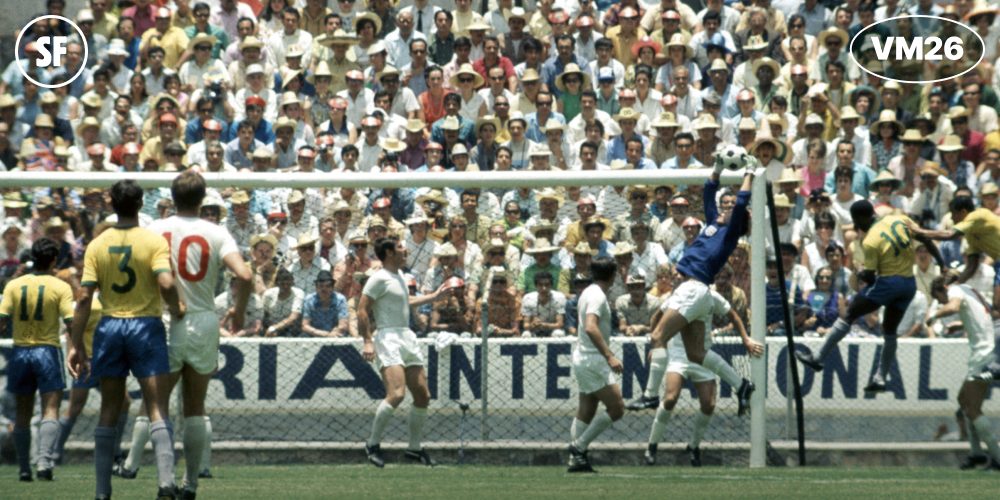
England’s campaign began with a narrow 1-0 win over Romania courtesy of a Geoff Hurst goal. The defining moment of the group stage came against Brazil, when Gordon Banks produced what Pelé himself described as the greatest save he had ever seen — a miraculous one-handed reaction to deny the Brazilian’s powerful downward header. England lost 1-0 but earned global admiration.
A 1-0 victory over Czechoslovakia, settled by Allan Clarke’s penalty, secured second place in the group behind Brazil. The performance, however, was patchy. England created chances but lacked the fluency that had characterised their 1966 triumph.
The Quarter-Final Collapse
In Leon, against a West German side they had beaten in the 1966 final, England started superbly. Alan Mullery scored his first international goal in the 31st minute, and Martin Peters doubled the lead shortly after half-time. With a two-goal cushion and less than 45 minutes to play, England looked certain to book a semi-final berth.
Then came the turning point. With England in control, Ramsey substituted Bobby Charlton — the team’s creative heartbeat — in what was widely interpreted as an attempt to save the midfielder’s energy for the semi-final. Franz Beckenbauer pulled one back almost immediately in the 68th minute. The momentum shifted decisively.
Uwe Seeler equalised in the 82nd minute with a bizarre looping header that caught Peter Bonetti — replacing the ill Banks — off guard. In extra time, Gerd Müller, the tournament’s top scorer, powered home the winner in the 108th minute. England were out.
Tactical Controversy
Ramsey’s decision to substitute Charlton has been debated for over five decades. Was it hubris? Fatigue management? A tactical misreading of West Germany’s capacity to fight back? Whatever the rationale, it removed England’s primary ball-holder and rhythm-setter at the precise moment the Germans were growing into the game. Colin Bell, an excellent player in his own right, replaced Charlton but could not replicate his composure.
The absence of Banks — laid low by a stomach bug — was another critical factor. Bonetti, a fine goalkeeper for Chelsea, had a torrid evening and was blamed by the English press for both Seeler’s equaliser and the general uncertainty in the defensive line.
Legacy of the 1970 Side
England’s 1970 squad remains one of the most talented in the nation’s history. The spine of the team — Banks, Bobby Moore, Bobby Charlton, and Geoff Hurst — represented the gold standard of English football. Moore’s performance against Pelé in the group stage is still regarded as one of the greatest individual displays by a defender in World Cup history.
Yet the quarter-final defeat marked the end of an era. Ramsey’s England never recovered the aura of invincibility they had carried into the tournament. The hangover from Leon affected several players deep into the following club season, and the cycle of English expectation meeting heartbreak at major tournaments was born.
As the Three Lions prepare for another World Cup campaign in 2026, the lesson of 1970 endures: in knockout football, no lead is safe, and no champion is immune to a collapse.
Source attribution: Historical analysis based on SvenskaFans feature and FIFA archives.