Keeping the Squad Match-Fit in America
The French national team staff have devised an innovative plan to keep their substitutes sharp during the 2026 World Cup: organised friendly matches against local youth teams between competitive fixtures. The approach, which mirrors strategies employed at previous major tournaments, will see France’s fringe players take on academy sides from MLS club New England Revolution during the group stage.
With six days between France’s opening match against Senegal and their second group fixture against Iraq, the coaching staff have scheduled two closed-door friendlies — one on June 17 and another on June 23 — designed specifically for players who do not feature in the starting eleven. The opponents will be drawn from the youth ranks of New England Revolution, based in Foxborough, Massachusetts, where France are stationed for their early group matches.
A Proven Formula from Previous Tournaments
The strategy is not without precedent. During the 2018 World Cup in Russia, Didier Deschamps’ staff organised internal matches and local opposition for reserves, a practice repeated at the 2022 Qatar World Cup and at Euro 2024 in Germany. The rationale is straightforward: players who go ten to fourteen days without competitive minutes risk losing match sharpness, fitness, and rhythm — a particular concern in a tournament where squad depth often determines the eventual champion.
“The staff of the French team has decided, on certain aspects, to calibrate its programming for the 2026 World Cup based on what was done in Russia in 2018, in Qatar in 2022, or more recently in Germany during Euro 2024,” reported L’Équipe. The French Football Federation has also approached several other local teams to provide additional opposition if France progress deeper into the tournament.
The Challenge of a 48-Team Tournament
The expanded 48-team World Cup presents unique logistical challenges. With more matches and an extended group phase, managers must manage larger squads across multiple venues. France’s proactive approach to substitute conditioning could provide a competitive edge — especially in the knockout stages, where fatigue and injuries to starters test squad depth to its limits.
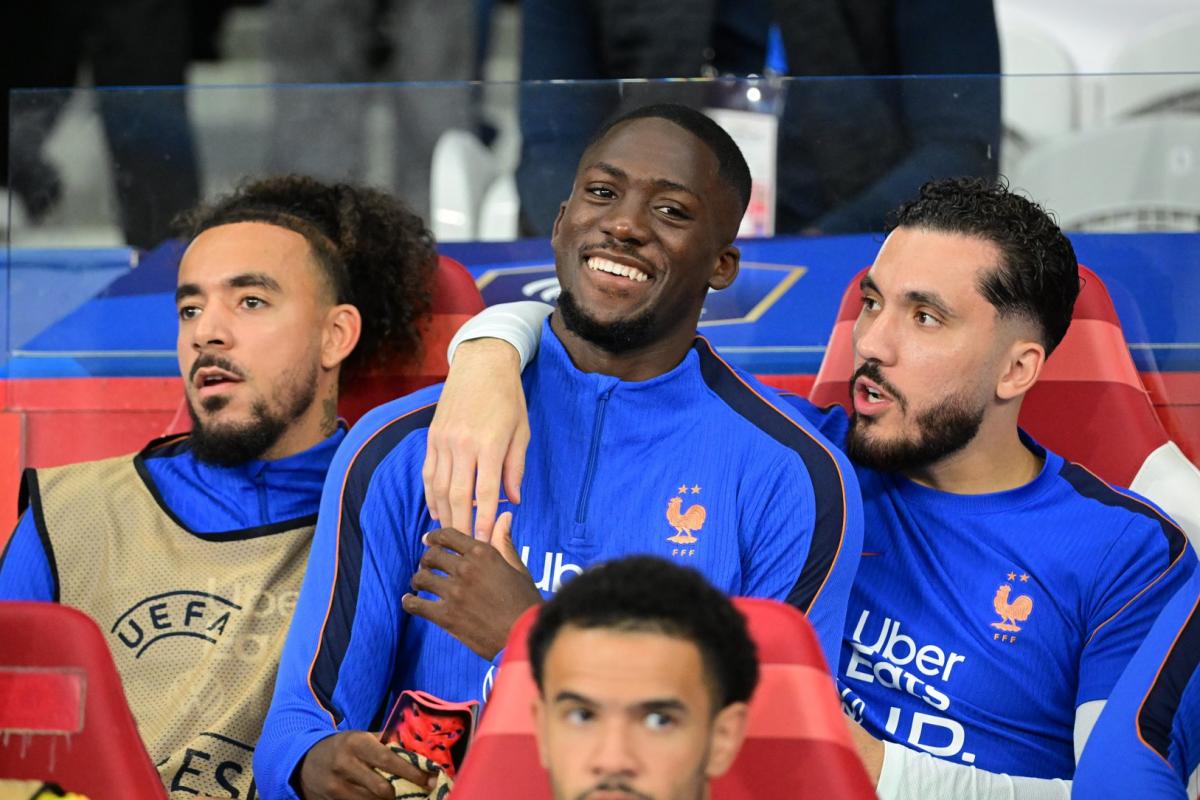
Players such as Malo Gusto, Ibrahima Konaté, and Rayan Cherki, who were on the bench during France’s recent warm-up victory, will benefit directly from these arrangements. The friendlies allow Deschamps to rotate without compromising preparation, ensuring every member of the 26-man squad arrives at each matchday ready to contribute.
World Cup Legacy: Managing the Human Element
Beyond tactical considerations, the initiative addresses a less discussed aspect of tournament football: the psychological toll of being a squad player at a World Cup. Substitutes who train intensively but never see match minutes can feel disconnected from the competition. By giving reserve players meaningful opposition — even in a friendly context — the French staff aim to maintain morale and cohesion across the entire squad.
As France prepare to open their campaign against Senegal, the behind-closed-doors friendlies represent a thoughtful, professional approach to squad management. Whether this attention to detail translates into silverware remains to be seen, but it reflects a coaching staff leaving no stone unturned in pursuit of World Cup glory.
Source: L’Équipe