
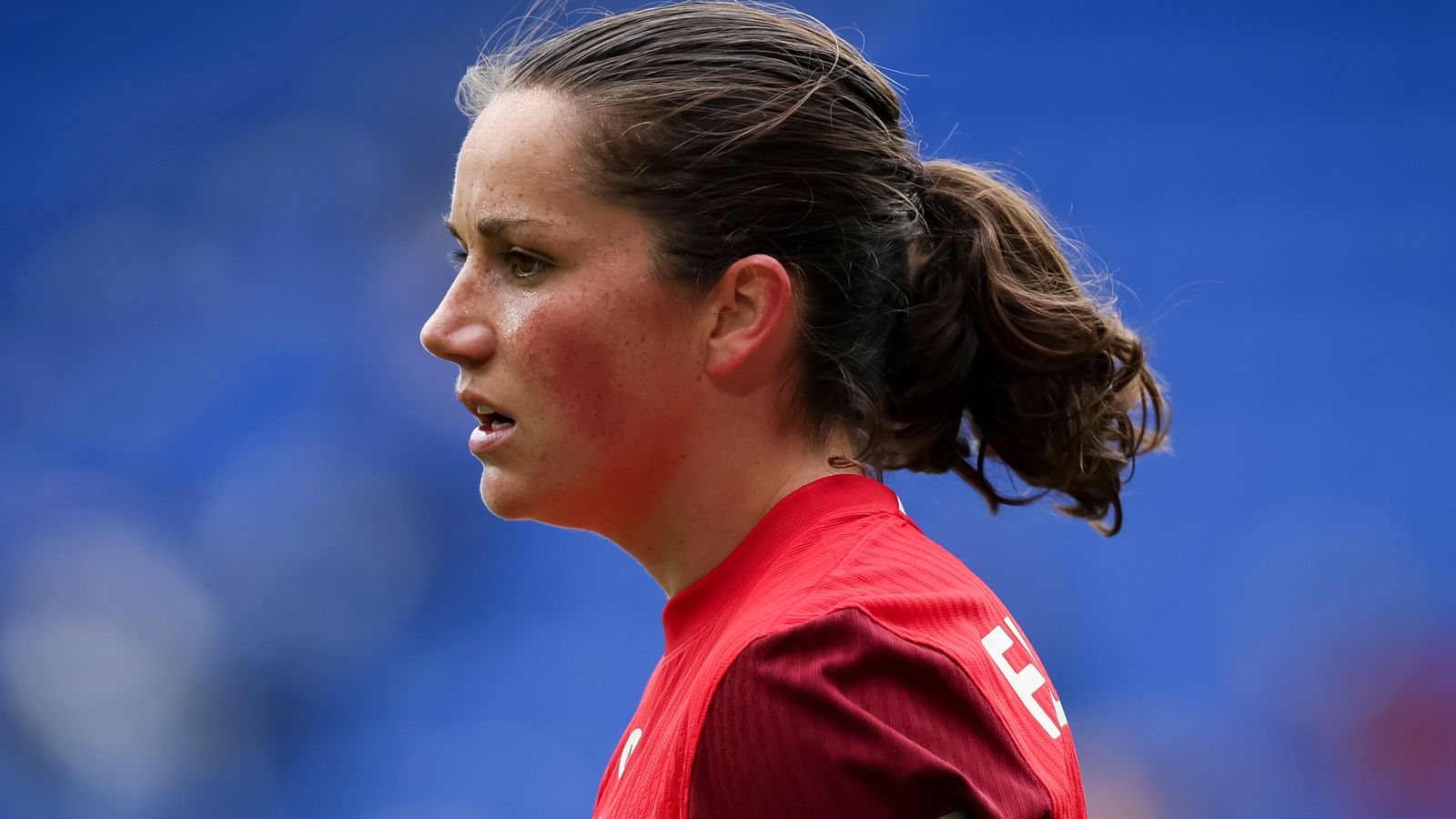
When Jessie Fleming inherited the Canada captaincy from Christine Sinclair — arguably the greatest goalscorer in international football history — she knew the weight of the armband came with responsibilities far beyond the pitch. Now, as she prepares to lead her country into the next round of World Cup qualification, the Portland Thorns midfielder is opening up about the mental health strategies that have shaped her career.
Following a Legend
Sinclair’s retirement left a void that cannot be filled by goals alone. With 190 international strikes, the former captain was the face of Canadian women’s football for two decades. Fleming’s approach has been different but equally impactful — she leads through introspection, empathy, and an openness about the psychological demands of elite sport that was rarely discussed during Sinclair’s era.
“Maybe I underestimated how difficult it would be,” Fleming reflects on the captaincy. “I’ve definitely come back to leaning on some of these mental health-related tools. My brain likes to sway more towards self-doubt and overthinking, and I take the role very seriously, which leads me to question whether something I said to a team-mate has impacted them negatively.”
Building a Mental Health Toolkit
Fleming is part of a new audio series from Common Goal and Everton in the Community, alongside figures like Vivianne Miedema, Naomi Girma, and Becky Sauerbrunn, exploring the mental health challenges faced by professional footballers. For Fleming, the topic is deeply personal. Since joining Chelsea at the age of 22, she has developed coping strategies that blend professional support with the camaraderie of the dressing room.
“One thing that I’ve been really grateful for is the group of players that I have around me,” she explains. “That’s another element of mental health — I’ve been able to lean on close friends and team-mates and there are so many other leaders on the team.”
The Pressure of Canadian Expectations
Canada’s women’s team has set a high bar. Olympic gold in Tokyo 2020 was followed by a bronze in Paris 2024, establishing the national side as perennial contenders on the world stage. Fleming was a key figure in both campaigns, and the expectation to maintain that standard while integrating a new generation of players is a challenge she confronts honestly.
“It’s something I’m trying to work through from a mental health perspective,” she says. “Not putting too much pressure on myself for it to just be me or be someone that I’m not.”
Life at Portland Under Vilahamn
Fleming’s move to Portland Thorns reunited her with Robert Vilahamn, the former Tottenham boss who brought an attacking philosophy to the NWSL side. The transition from the WSL, where she spent five trophy-laden years at Chelsea, to the more physically demanding American league has required adaptation — but Fleming believes the change has made her a more complete player.
As Canada prepares for the next phase of World Cup qualification, Fleming’s leadership will be critical. She represents a new archetype of football captain — one for whom mental strength is not a given to be assumed but a practice to be cultivated daily. In sharing her journey, she is helping to normalise conversations that were once taboo in the dressing room.
Source: Sky Sports