
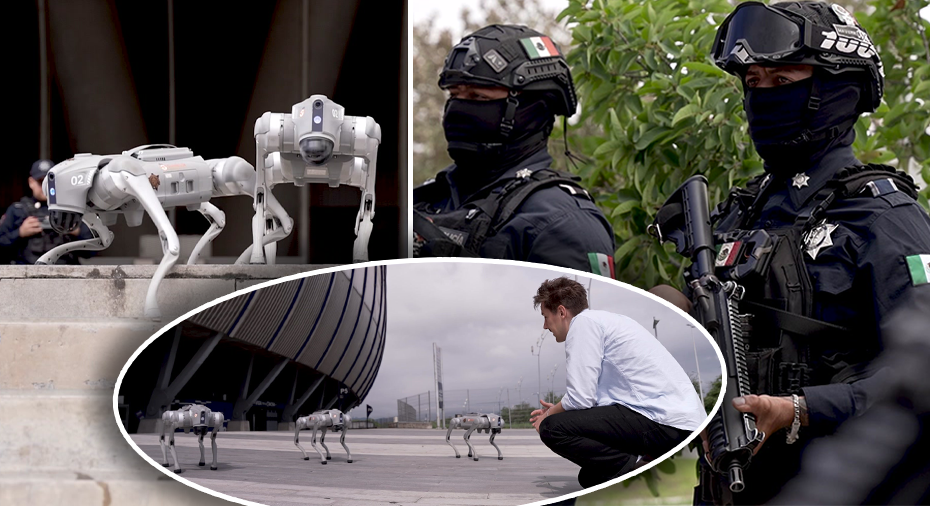
Four-legged robots costing approximately 1.3 million Swedish kronor each are patrolling the streets and stadiums of Monterrey during the 2026 World Cup, as Mexican authorities deploy cutting-edge technology to ensure the safety of teams and fans.
The robot dogs, equipped with advanced sensors, cameras, and artificial intelligence capabilities, are the latest addition to Mexico’s security apparatus for the tournament. Miguel Zepeda, chief of police in Monterrey, confirmed that the robotic units are already operational.
How the Robot Dogs Work
“They help us make better decisions,” Zepeda explained. The robotic canines are designed to navigate difficult terrain, access areas that might be hazardous for human officers, and provide real-time surveillance data to command centers. Each unit can operate autonomously or be remotely controlled by a handler.
The deployment represents a significant investment in security infrastructure, with multiple units assigned to patrol areas around Estadio BBVA, where Sweden will face Tunisia, as well as other key locations throughout the city.
Massive Security Operation
The World Cup is one of the most security-intensive sporting events on the planet, and Mexico has pulled out all the stops. Authorities have promised that security around all stadiums and fan zones will be guaranteed throughout the tournament. The robot dogs complement traditional security measures including police patrols, CCTV networks, and drone surveillance.
Our officers on the ground will be supported by the best technology available,” Zepeda said, adding that the robot dogs give police a tactical advantage, particularly in situations where human officers might be at risk.
A Growing Trend in Sports Security
The use of robotic technology in sports security is a growing trend worldwide. Major events such as the Olympics, Super Bowls, and now the World Cup have experimented with drones, autonomous vehicles, and robotic patrol units. The robot dogs, built by Boston Dynamics and similar manufacturers, offer a mobile, persistent surveillance capability that static cameras cannot match.
This is the first time such technology has been deployed on this scale at a World Cup, setting a precedent for future tournaments in 2030 and beyond. If successful, the program could become standard practice for host nations.
Mixed Reactions from Fans
While many fans appreciate the visible security presence, the robot dogs have also sparked conversation on social media, with some comparing them to scenes from science fiction. The robots’ distinctive gait and futuristic appearance have made them unlikely stars of the tournament’s first week, with numerous videos going viral.
Regardless of public opinion, the authorities in Monterrey remain focused on their primary mission: ensuring the 2026 World Cup is safe for all participants and spectators. With the robot dogs on patrol, they feel better equipped than ever to meet that challenge.