
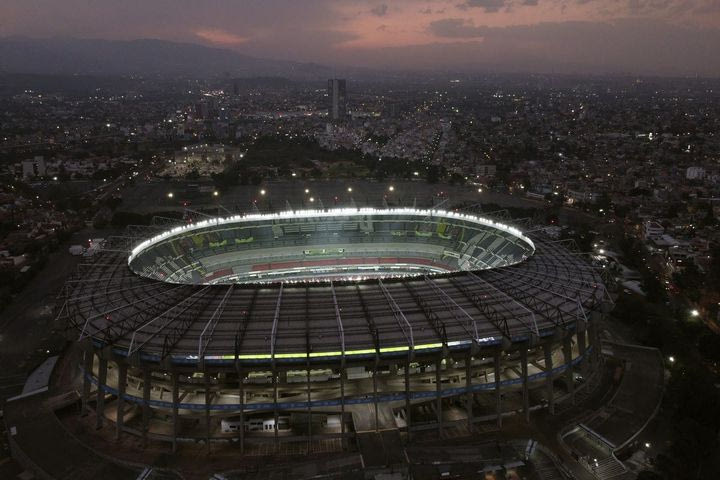
Football at 2,240 Metres
As the 2026 World Cup prepares to kick off across three host nations, one of the most intriguing — and potentially decisive — factors is the altitude. Mexico City’s Estadio Azteca, one of the iconic venues of the tournament, sits at an elevation of 2,240 metres above sea level. For players accustomed to sea-level conditions, the thin air represents one of the most demanding physiological challenges in sport.
The effects of altitude on athletic performance are well documented. Reduced oxygen availability leads to faster fatigue, decreased sprint capacity, and impaired decision-making in the later stages of matches. For teams unaccustomed to training at elevation, the difference can be stark — and potentially match-deciding.
Who Benefits and Who Struggles
Teams from South America’s Andean nations — Bolivia, Colombia, Ecuador, and Peru — regularly play qualifiers at altitude and have developed sophisticated acclimatisation protocols. Similarly, Mexico’s own players are intimately familiar with conditions in the capital. For European sides accustomed to sea-level conditions, the adjustment period is shorter and the physiological shock more pronounced.
FIFA’s medical officials have issued detailed guidance to all participating nations, recommending that teams arrive at altitude venues at least 10-14 days before matches to allow for proper acclimatisation. However, the tournament’s compact schedule — with 104 matches across 16 venues in three countries — means that many teams will be shuttling between sea-level and altitude venues within days.
The Azteca Factor
The Estadio Azteca has long been considered one of football’s most intimidating venues, and altitude is a significant part of that mystique. At 2,240 metres, the ball travels faster and swerves more unpredictably. Goalkeepers must adjust their judgement of flighted balls, while outfield players find that passes carry further than expected.
Historical data from qualifiers played at altitude shows a clear home advantage. Teams from low-lying nations typically record lower possession stats, reduced passing accuracy, and significantly higher error rates in the second half of matches played above 2,000 metres.
Acclimatisation Strategies
Sports scientists accompanying the competing nations have developed a range of countermeasures. These include simulated altitude training in hypoxic chambers before departure, specific breathing exercises, and iron supplementation to boost red blood cell production. Some teams are also planning to base their pre-tournament training camps at altitude locations to accelerate the adaptation process.
Despite these preparations, the reality is that no amount of technology can fully replicate the experience of playing a high-intensity match at 2,240 metres. For the teams drawn to play at the Azteca, the thin air could prove to be the most formidable opponent of all.
A Tactical Revolution?
Coaches are already adjusting their tactical approaches for altitude fixtures. High-pressing systems that demand sustained physical output become significantly more taxing at elevation. Teams may need to adopt more conservative pressing triggers, rotate possession more patiently, and make earlier substitutions than they would at sea level.
As the 2026 World Cup unfolds across the vast geography of North America, the altitude of Mexico City may well become one of the defining narratives of the tournament. In a competition where the margins between victory and defeat are razor-thin, the ability to master the thin air could be the difference between glory and elimination.